• Skip to main content
  • Skip to secondary menu
  • Skip to primary sidebar
  • Skip to footer
  • Home
  • Contact
Aquarium Tidings

Aquarium Tidings

Aquarium, Freshwater Fish, Aquariums, Aquatic Plants

Latest Article

The Best Fish for a 10-Gallon Aquarium

If you’re thinking about getting into fish keeping, then the 10-gallon aquarium is the perfect size to dip your toes into the hobby. Not only is it large enough to allow you to keep a wide variety of fish, but it’s still small enough that any maintenance is quick and easy. But that doesn’t mean […]

  • Tropical Fish
  • Cold Water Fish
  • Invertebrates
  • Aquatic Plants
  • Ponds
  • Articles
  • Reviews

Pictus Catfish – How to Care for Pictus Catfish

July 17, 2014 by Robert Brand 10 Comments

Pictus CatfishQuick Stats

Minimum Tank Size: 45 Gallons (205 Liters)
Care Level: Moderately Hard
Water Conditions: 5.5-7.0 pH and Soft Water
Temperature: 72-77 °F (22-25 °C)
Maximum Size: 5 inches (20 cm)

The Pictus Catfish (Pimelodus pictus) is a small catfish that is native to the Orinico and Amazon rivers and can be found in Brazil, Colombia, Venezuela and Peru. It is occasionally confused with Synodontis Angelicus catfish, but these two catfish require very different conditions, as the Synodontis Angelicus catfish is native to Africa.

In the wild, the pictus catfish mainly inhabits shallow waters, and can usually be found in areas with a steady flow of water over a muddy or sandy bottom. It is a shoaling species, and they will often be found in large groups in the wild. Their aquarium should mimic these conditions as closely as possible, and they generally do best when kept in groups, with a low level of illumination and a sandy substrate.

In the home aquarium, they generally grow to a maximum size of 5 inches, though there is a rarely seen small spotted variant that can grow even larger. Most of the commonly available pictus catfish in the aquarium hobby are the large spotted variant.

Housing

The pictus catfish is an active fish, that requires a tank that can provide them with a large swimming area. At the bare minimum, they should be provided with at least a 45 gallon (205 liters) aquarium, though larger tanks are preferable. With that being said, even a 45 gallon (205 liter) aquarium can accommodate several pictus catfish, since this species is non-territorial and a handful can co-exist peacefully if given sufficient space.

Any tank containing pictus catfish should be dimly lit, or at the very least have a very heavy aquatic plant canopy to dim the bottom of the tank. This fish will stay in hiding for much of the day if they are kept in an overly bright tank, but will be relatively active in a dimly lit aquarium. Their aquarium should also contain numerous hiding places, and if at all possible, the hiding places should allow enough room for the fish to turn around inside. Claypots on their side make excellent hiding places for pictus catfish.

Pictus catfish generally do best when kept in a riverine biope aquarium, and plants, driftwood and river rocks can be added to simulate a river in their tank. Because of their low light requirements, you can add Java moss, moss balls, hornwort or any other low light plant that is available in your area.

When choosing a filter for a pictus catfish tank, it’s best to over filter the aquarium and provide a strong flow of current to their tank. One of the best choices for this is a hang on back filter, since it provides excellent filtration and a decent amount of flow to a tank. It’s very important that you keep to a regular cleaning schedule in their tank, since pictus catfish are very sensitive to nitrates. It might be best to pair a hang on back filter with a sponge filter, just to ensure maximum filtration for the tank.

If you are looking for a hang on back filter, one of the best filters on the market is the Aquaclear Power Filter. This filter combines excellent filtration with a durable design, and it will keep your tank sparkling clear for years to come. You can also read the Aquarium Tidings Aquaclear Filter Review here.

Feeding

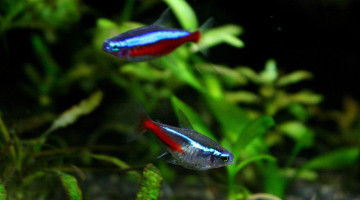
Feeding a pictus catfish is a not a difficult task, and like many other catfish, they will eat nearly anything that they can fit into their mouths. This becomes dangerous if you have any small fish in the aquarium, and fish like neon tetras should be avoided in pictus catfish tanks.

In the wild they are omnivores, and consume invertebrates, plant matter and algae. This diet can be recreated in the home aquarium through feeding them a diet that includes a high quality sinking pellet, and frozen foods, including frozen bloodworms, daphnia, blackworms and brine shrimp. If you are looking for a good sinking pellet, one of the best is Hikari Sinking Wafers, which I use for many of the catfish that I keep.

They can also be fed live foods, and two of their favorite foods are blackworms and thoroughly cleaned earthworms (always be careful offering earthworms if they could have come in contact with pesticides). They tend to ignore top dwelling live food, but you can always try out staples like mosquito larvae and bloodworms to see if your fish will accept them.

Breeding

There have been no confirmed reports of pictus catfish breeding in aquariums, and few people have even reported anything than can be considered breeding behaviors. They are difficult to sex, though it is believed that the females tend to be slightly larger than the males.

Transportation

Transporting these catfish can be difficult, since they come equipped with venomous spines that can pierce bags, and give painful, sting like wounds to anyone unlucky enough to touch one. Though the venom is harmless, it will leave you in great deal of pain for several hours, and may cause swelling.

Nets should also be avoided with pictus catfish, since the spines can become entangled in the nets and injure the fish. It’s best to use a cup, or something else with smooth sides if you have to catch and move one of these fish.

Share this:

  • Twitter
  • Facebook
  • Reddit
  • Pinterest
  • Telegram
  • WhatsApp
  • Email

Like this:

Like Loading...

Filed Under: Tropical Fish

Reader Interactions

Comments

  1. Destiny Head says

    April 20, 2017 at 3:56 pm

    I am looking for channel catfish

    Loading...
    Reply
    • Robert Brand says

      April 22, 2017 at 5:45 pm

      To buy, or information on them?

      Loading...
      Reply
  2. Marcelluss says

    July 30, 2017 at 4:34 am

    I just bought two. They are very feisty. Will they settle down?

    Loading...
    Reply
    • Robert Brand says

      August 3, 2017 at 12:55 am

      They usually do after a while. I find after they claim a cave they usually become more docile in the aquarium – though some still stay a little feisty.

      Loading...
      Reply
  3. Angel says

    August 25, 2018 at 3:12 pm

    Do they eat flakes and mine is growing really fast

    Loading...
    Reply
    • Robert Brand says

      August 25, 2018 at 8:53 pm

      They do best with a sinking food usually. Pictus catfish really appreciate any sort of meaty frozen foods too, so try to add them regularly as well.

      Loading...
      Reply
  4. Pieter says

    April 20, 2019 at 2:09 pm

    My pictus catfish is 9 inches atm !! 5 inches max is incorrect please correct it .

    Loading...
    Reply
    • Robert Brand says

      April 22, 2019 at 4:54 pm

      All scholarly sources, as well as published fish guides state the maximum length is somewhere between 5-6 inches for all pictus catfish. Are you sure you have the correct species and how are you measuring the fish?

      Loading...
      Reply
      • Justin says

        January 4, 2020 at 12:18 am

        I bought a syndontious catfish or a similar name to that and it was supposed to be a pictus much better than a wild lively little terrorist. They max at 10″ approx but very docile and part of the upside down cat family and a much more valuable fish

        Loading...
        Reply
        • Robert Brand says

          January 5, 2020 at 3:39 pm

          Those are really nice catfish and I’ve been trying to find some of them in my area for years. They’re perfect for my water here, but no sellers ever seem to have them in my area.

          Loading...
          Reply

Leave a ReplyCancel reply

Primary Sidebar

Follow Aquarium Tidings

Follow Us on FacebookFollow Us on TwitterFollow Us on Pinterest

Recent Articles

5 of the Best Beginner Fish for Your Aquarium

October 2, 2021 By Robert Brand

The Complete Kenyi Cichlid Care Guide (Maylandia lombardo)

March 31, 2021 By Robert Brand

The Complete Beginner’s Guide to Goldfish

January 4, 2021 By Dana MacPherson

The Complete Glass Catfish Care Guide (Kryptopterus vitreolus)

December 29, 2020 By Robert Brand

5 Oddball Fish to Add to an Aquarium

December 3, 2020 By Robert Brand

The Complete Rainbow Shark Care Guide (Epalzeorhynchos frenatum)

August 25, 2020 By Robert Brand

Getting Started

The Complete Guide to Cycling an Aquarium
Colorful Freshwater Fish for Beginners
How to Feed Aquarium Fish
Beginner Aquarium Plants That Anyone Can Grow
4 Things You Need to Know About Aquarium Care
How to Clean an Aquarium
How to Choose An Aquarium Substrate

Disclosure: Aquarium Tidings receives compensation from the companies whose links we post. Aquarium Tidings is independently owned and the opinions expressed here are our own.

As an Amazon Associate I earn from qualifying purchases

Recent Articles

5 of the Best Beginner Fish for Your Aquarium

If you’ve ever wanted to take the plunge and get into the aquarium hobby, it can feel overwhelming at first. When you first walk into a pet store, you’re confronted with a wall of tanks containing brightly colored fish and invertebrates. And while some will survive in almost any conditions, others seem to drop dead […]

5 Oddball Fish to Add to an Aquarium

If you’re like many aquarists out there, the thought of having a perfectly aquascaped tank with a brightly colored school of fish bores you to tears. You want something different. You want a unique aquarium, filled with oddball fish that people can’t help but notice the moment they enter a room. Luckily, the aquarium trade […]

Recent Tropical Fish Profiles

The Complete Kenyi Cichlid Care Guide (Maylandia lombardo)

The Kenyi Cichlid (Maylandia lombardoi) is a popular fish in the aquarium trade, where it’s often found under a variety of names, including kenyi mbuna, kennyi mbuna, and lombardoi mbuna. It’s also sometimes classified under the genus Metriaclima, due to an ongoing dispute over the naming. This species is highly sexually dimorphic, and the mature […]

The Complete Glass Catfish Care Guide (Kryptopterus vitreolus)

The glass catfish (Kryptopterus vitreolus), also known as the ghost catfish, or the phantom catfish, is a unique species of small catfish native to Asia. As the name implies, these catfish have a body that is transparent, with their skeletons and internal organs clearly visible. The only time their body will become translucent – turning […]

Recent Cold Water Fish Profiles

The Complete Beginner’s Guide to Goldfish

When my daughter brought home two goldfish from a local fair a few years ago, I had absolutely no idea what to do with our new pets. I had never kept fish before, and I didn’t know much about goldfish other than they seemed to love living in bowls. So off to the local pet […]

All About Goldfish – How to Care for a Goldfish Fish at Home

Learn everything you need to keep your goldfish happy and healthy at home. From what to keep them in, to how to feed them, you will find all the information here.

Recent Aquatic Plants Articles

Water Lettuce – How to Grow and Care for Pistia (Water Lettuce)

Learn how to grow and care for Water lettuce (Pistia stratiotes). Find all the information you need here to help this plant thrive.

Jungle Val – How to Grow and Care for Jungle Vallisneria

Learn how to grow a Jungle Val (American Vallisneria), a popular and hardy aquatic plant. Find all the information you need to help this plant thrive in the home aquarium.

Recent Pond Articles

The Secret to Building a Thriving and Healthy Fish Pond

A fish pond can be the crowning achievement to a perfectly manicured and landscaped yard, or it can be a simple tub with a few minnows. But no matter what kind of pond you are looking to build, you’re going to need to carefully plan it out and build it right – unless you want to deal with algae infested waters, choked with dead fish.

How to Build a Turtle Pond

It’s rare to find someone who doesn’t enjoy a pond in their backyard. You can spend hours relaxing by the water’s edge, as you enjoy the tranquility that a pond brings to a backyard. And while fish ponds are the most popular types of pond, they aren’t the only option for your property.

Recent Invertebrates Profiles

Bamboo Shrimp – The Complete Care Guide for Bamboo Shrimp

Learn how to care for the bamboo shrimp, a finicky but fascinating freshwater shrimp. From what to feed them, to how to house them, you’ll find all the information you need here.

Red Crystal Shrimp – A Complete Guide to Their Care

Learn how to care for the popular and stunning Red Crystal Shrimp. From what to feed them, to how to breed them, you’ll find all the information you need here.

Recent Product Reviews

Where to Find Affordable Aquariums Online

It can be difficult to find affordable aquariums online, but there are some great, reliable retailers to purchase them from. Find out where to buy them,

5 Excellent Aquariums to Choose for Your Betta Fish

Contrary to popular belief, Betta fish shouldn’t be kept in tiny containers of water. But it’s not as simple of just picking up the first aquarium you see. Find out what aquariums are suitable for a Betta fish here.

Footer

Aquarium Tidings

Privacy Policy

Recent

  • The Best Fish for a 10-Gallon Aquarium
  • 5 of the Best Beginner Fish for Your Aquarium
  • The Complete Kenyi Cichlid Care Guide (Maylandia lombardo)
  • The Complete Beginner’s Guide to Goldfish
  • The Complete Glass Catfish Care Guide (Kryptopterus vitreolus)

Search

Tags

adf african dwarf frogs amano shrimp amazon sword ameca splenden aquarium beginner fish blind cave tetra bn pleco breeding bristlenose pleco butterfly splitfin care cherry barb convict cichlid crayfish dojo loach dwarf puffer feeding feeding breeding feeding fish fish ghost catfish glass catfish golden apple snail goldfish growing guppy harlequin rasbora hornwort malaysian trumpet snail molly fish mts mystery snail neon tetra oscar fish pea puffer red tail shark rosy red minnow tank mates tiger barb wcmm weather loach white cloud mountain minnow zebra danio

Copyright © 2026 · Magazine Pro on Genesis Framework · WordPress · Log in

%d