• Skip to main content
  • Skip to secondary menu
  • Skip to primary sidebar
  • Skip to footer
  • Home
  • Contact
Aquarium Tidings

Aquarium Tidings

Aquarium, Freshwater Fish, Aquariums, Aquatic Plants

Latest Article

The Best Fish for a 10-Gallon Aquarium

If you’re thinking about getting into fish keeping, then the 10-gallon aquarium is the perfect size to dip your toes into the hobby. Not only is it large enough to allow you to keep a wide variety of fish, but it’s still small enough that any maintenance is quick and easy. But that doesn’t mean […]

  • Tropical Fish
  • Cold Water Fish
  • Invertebrates
  • Aquatic Plants
  • Ponds
  • Articles
  • Reviews

Head-and-Taillight Tetras – A How-To Guide for Caring for Head-and-Taillight Tetras

October 1, 2017 by Robert Brand Leave a Comment

Quick Stats
Minimum Tank Size: 20 Gallons (75 Liters)
Care Level: Very Easy
Water Conditions: PH 5-5-7.5 Soft to Moderately Hard
Temperature: 72-79°F (22-26°C)
Maximum Size: 2 inches (5 cm)

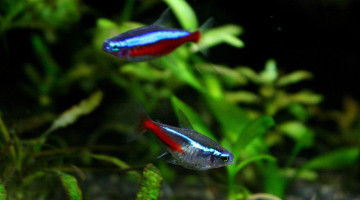
The head-and-taillight tetra (Hemigrammus ocellifer), also known as the beacon tetra, is a small and popular beginner fish. They have the distinction of being one of the best-suited tetras for community tanks, and because of their ease of care and peaceful nature, they can be found in nearly every store that sells fish.

Few – if any – of the head-and-taillight tetras available for sale are still wild caught, and most are bred on vast fish farms in Eastern Europe and Southeast Asia. Because of this, head-and-taillight tetras can adapt to a wide variety of water types – unlike their wild cousins.

These fish are native to the rivers of Suriname, Guyana, French Guiana, Brazil, and Peru. They are found in coastal regions and prefer slow-moving water. They inhabit rivers, streams, freshwater lagoons, and floodplain lakes.

These fish live between three to five years in a home aquarium, though a lifespan of around three years seems to be around average. They will grow to a maximum length of 2 inches (4.5cm).

Housing

Head-and-taillight tetras are an undemanding fish, and a group of these fish can be comfortably housed in a 20-gallon (75 litre) aquarium. They should always be kept in groups of at least six but seem to thrive when kept in groups of ten or more. As these fish are non-aggressive, they will do well with most peaceful fish in a community aquarium.

When setting up an aquarium for these fish, their natural habitat should be mimicked as closely as possible. A sandy substrate is preferred with leaf litter lining the bottom, and driftwood should be added to provide hiding places. While their aquariums don’t have to be planted, live plants are always an excellent addition to aquariums, but it’s important to leave open areas for swimming.

Some aquarists attempt to recreate black water conditions with peat and leaf litter (which helps to lower the pH), but as long as the lighting in the tank is somewhat muted, it’s not necessary to go to the lengths required to create a black water tank.

As head-and-taillight tetras prefer little to no current, extra care should be taken when choosing their filter. While a hang-on-back filter is usually the preferred choice in small aquariums, it may provide more current than these fish are comfortable with. But the current can be lessened to more tolerable levels by lowering the flow from the filter.

The filter I always recommend is the Aquaclear Power Filter, which is both affordable and incredibly durable. A sponge filter would also be a good candidate for use in a head-and-taillight tetra aquarium.

Feeding

Head-and-taillight tetras are omnivores, and in the wild, feed on small insects, worms, crustaceans, and plant matter. This diet should be replicated as closely as possible in the home aquarium, and this can be done by offering these fish a high-quality flake food, along with regular feedings of frozen and live foods.

I personally recommend Hikari Micro Pellet Fish Food, as it provides all the needed nutrients and vitamins for the fish. When it comes to choosing live food, they will greedily accept blackworms (tubifex in Europe), daphnia, gut-loaded brine shrimp, and mosquito larvae (illegal to culture in some areas). Their preferences are similar for frozen food, and they can be fed bloodworms, blackworms, and brine shrimp.

Breeding

Head-and-taillight tetras are notoriously prolific and will often breed in an aquarium with no intervention from the aquarist. However, very few – if any – of the fry will normally survive in a community tank.

The males have a more pointed swim bladder than the females, while the females have a slightly covered swim bladder, so it appears more rounded underneath. The females also tend to be larger than the males, with a rounder body.

If the goal is to breed these fish, then a separate breeding tank should be setup. The breeding tank should be fully cycled prior to adding fish to it. Only the barest of lighting should be provided for the tank, and often ambient room lighting will be more than adequate. But once spawning has occurred, it’s important to keep the tank in near darkness as the fry are very sensitive to light.

The breeding tank water should be soft and acidic, and there are several ways to lower the pH of an aquarium. For more information on safely lowering the pH in an aquarium, read the Aquarium Tidings article – How to Safely Lower the pH in an Aquarium.

For successful breeding to occur, it’s important to add fine-leaved plants such as Water Sprite or Java moss to the breeding tank. Artificial spawning mops will also work, but in my experience, fry seem to have a better survival rate with live plants. The plants or spawning mop will provide a surface for the fish to deposit their eggs on, and the dense, interwoven leaves of the plants will help to protect the eggs from the adults.

Once the tank is properly setup, it’s simply a matter of adding a small group of males and females. They should then be conditioned by providing them with live or frozen foods. Soon afterward, spawning should occur.

It’s important to remove the adults after the eggs have been deposited on the plants, as they will eat the eggs and any fry that eventually hatch. The survival rate of the fry will likely be very low if the adults aren’t removed from the aquarium.

The eggs normally hatch after 24 hours and will become free swimming after around three days. The fry can be fed infusoria or commercially available fry food, until they are large enough to consume baby brine shrimp and microworms.

Community Tank Compatibility

Head-and-taillight tetras are an excellent beginner fish and are renowned for their peaceful nature in community aquariums. They will do well in aquariums containing danios, corydoras catfish, rasboras, most peaceful gouramis, dwarf cichlids, and my personal favorite – rosy red minnows.

Share this:

  • Twitter
  • Facebook
  • Reddit
  • Pinterest
  • Telegram
  • WhatsApp
  • Email

Like this:

Like Loading...

Filed Under: Tropical Fish Tagged With: head-and-taillight-tetras

Reader Interactions

Leave a ReplyCancel reply

Primary Sidebar

Follow Aquarium Tidings

Follow Us on FacebookFollow Us on TwitterFollow Us on Pinterest

Recent Articles

5 of the Best Beginner Fish for Your Aquarium

October 2, 2021 By Robert Brand

The Complete Kenyi Cichlid Care Guide (Maylandia lombardo)

March 31, 2021 By Robert Brand

The Complete Beginner’s Guide to Goldfish

January 4, 2021 By Dana MacPherson

The Complete Glass Catfish Care Guide (Kryptopterus vitreolus)

December 29, 2020 By Robert Brand

5 Oddball Fish to Add to an Aquarium

December 3, 2020 By Robert Brand

The Complete Rainbow Shark Care Guide (Epalzeorhynchos frenatum)

August 25, 2020 By Robert Brand

Getting Started

The Complete Guide to Cycling an Aquarium
Colorful Freshwater Fish for Beginners
How to Feed Aquarium Fish
Beginner Aquarium Plants That Anyone Can Grow
4 Things You Need to Know About Aquarium Care
How to Clean an Aquarium
How to Choose An Aquarium Substrate

Disclosure: Aquarium Tidings receives compensation from the companies whose links we post. Aquarium Tidings is independently owned and the opinions expressed here are our own.

As an Amazon Associate I earn from qualifying purchases

Recent Articles

5 of the Best Beginner Fish for Your Aquarium

If you’ve ever wanted to take the plunge and get into the aquarium hobby, it can feel overwhelming at first. When you first walk into a pet store, you’re confronted with a wall of tanks containing brightly colored fish and invertebrates. And while some will survive in almost any conditions, others seem to drop dead […]

5 Oddball Fish to Add to an Aquarium

If you’re like many aquarists out there, the thought of having a perfectly aquascaped tank with a brightly colored school of fish bores you to tears. You want something different. You want a unique aquarium, filled with oddball fish that people can’t help but notice the moment they enter a room. Luckily, the aquarium trade […]

Recent Tropical Fish Profiles

The Complete Kenyi Cichlid Care Guide (Maylandia lombardo)

The Kenyi Cichlid (Maylandia lombardoi) is a popular fish in the aquarium trade, where it’s often found under a variety of names, including kenyi mbuna, kennyi mbuna, and lombardoi mbuna. It’s also sometimes classified under the genus Metriaclima, due to an ongoing dispute over the naming. This species is highly sexually dimorphic, and the mature […]

The Complete Glass Catfish Care Guide (Kryptopterus vitreolus)

The glass catfish (Kryptopterus vitreolus), also known as the ghost catfish, or the phantom catfish, is a unique species of small catfish native to Asia. As the name implies, these catfish have a body that is transparent, with their skeletons and internal organs clearly visible. The only time their body will become translucent – turning […]

Recent Cold Water Fish Profiles

The Complete Beginner’s Guide to Goldfish

When my daughter brought home two goldfish from a local fair a few years ago, I had absolutely no idea what to do with our new pets. I had never kept fish before, and I didn’t know much about goldfish other than they seemed to love living in bowls. So off to the local pet […]

All About Goldfish – How to Care for a Goldfish Fish at Home

Learn everything you need to keep your goldfish happy and healthy at home. From what to keep them in, to how to feed them, you will find all the information here.

Recent Aquatic Plants Articles

Water Lettuce – How to Grow and Care for Pistia (Water Lettuce)

Learn how to grow and care for Water lettuce (Pistia stratiotes). Find all the information you need here to help this plant thrive.

Jungle Val – How to Grow and Care for Jungle Vallisneria

Learn how to grow a Jungle Val (American Vallisneria), a popular and hardy aquatic plant. Find all the information you need to help this plant thrive in the home aquarium.

Recent Pond Articles

The Secret to Building a Thriving and Healthy Fish Pond

A fish pond can be the crowning achievement to a perfectly manicured and landscaped yard, or it can be a simple tub with a few minnows. But no matter what kind of pond you are looking to build, you’re going to need to carefully plan it out and build it right – unless you want to deal with algae infested waters, choked with dead fish.

How to Build a Turtle Pond

It’s rare to find someone who doesn’t enjoy a pond in their backyard. You can spend hours relaxing by the water’s edge, as you enjoy the tranquility that a pond brings to a backyard. And while fish ponds are the most popular types of pond, they aren’t the only option for your property.

Recent Invertebrates Profiles

Bamboo Shrimp – The Complete Care Guide for Bamboo Shrimp

Learn how to care for the bamboo shrimp, a finicky but fascinating freshwater shrimp. From what to feed them, to how to house them, you’ll find all the information you need here.

Red Crystal Shrimp – A Complete Guide to Their Care

Learn how to care for the popular and stunning Red Crystal Shrimp. From what to feed them, to how to breed them, you’ll find all the information you need here.

Recent Product Reviews

Where to Find Affordable Aquariums Online

It can be difficult to find affordable aquariums online, but there are some great, reliable retailers to purchase them from. Find out where to buy them,

5 Excellent Aquariums to Choose for Your Betta Fish

Contrary to popular belief, Betta fish shouldn’t be kept in tiny containers of water. But it’s not as simple of just picking up the first aquarium you see. Find out what aquariums are suitable for a Betta fish here.

Footer

Aquarium Tidings

Privacy Policy

Recent

  • The Best Fish for a 10-Gallon Aquarium
  • 5 of the Best Beginner Fish for Your Aquarium
  • The Complete Kenyi Cichlid Care Guide (Maylandia lombardo)
  • The Complete Beginner’s Guide to Goldfish
  • The Complete Glass Catfish Care Guide (Kryptopterus vitreolus)

Search

Tags

adf african dwarf frogs amano shrimp amazon sword ameca splenden aquarium beginner fish blind cave tetra bn pleco breeding bristlenose pleco butterfly splitfin care cherry barb convict cichlid crayfish dojo loach dwarf puffer feeding feeding breeding feeding fish fish ghost catfish glass catfish golden apple snail goldfish growing guppy harlequin rasbora hornwort malaysian trumpet snail molly fish mts mystery snail neon tetra oscar fish pea puffer red tail shark rosy red minnow tank mates tiger barb wcmm weather loach white cloud mountain minnow zebra danio

Copyright © 2026 · Magazine Pro on Genesis Framework · WordPress · Log in

%d